Since the beginning of time, our nourishing Earth has never ceased to offer the living people countless possibilities to feed and to content the being. Since the dawn of the 20th century, the Favrins have cultivated - through the prism of transmission - the cult of research, of amazement as to the future find that will emerge, not without patience, from a small terrestrial space.
The Favrin establishment was born before the Great War in 1906. Through time, neither the global conflicts nor the climatic disorders got the better of their domain. Impossible to remove them from their land, the family stays curious, with a passionate taste for the green heritage of their land. “We were born here, and we will die here.” Pierre Favrin sums up, always in activity. He continues: “My father worked until he was 85 years old with – as he always said – dirty hands. I think you simply cannot live without it when you’re in it. We have this passion within, this life that settles deeper each season.”
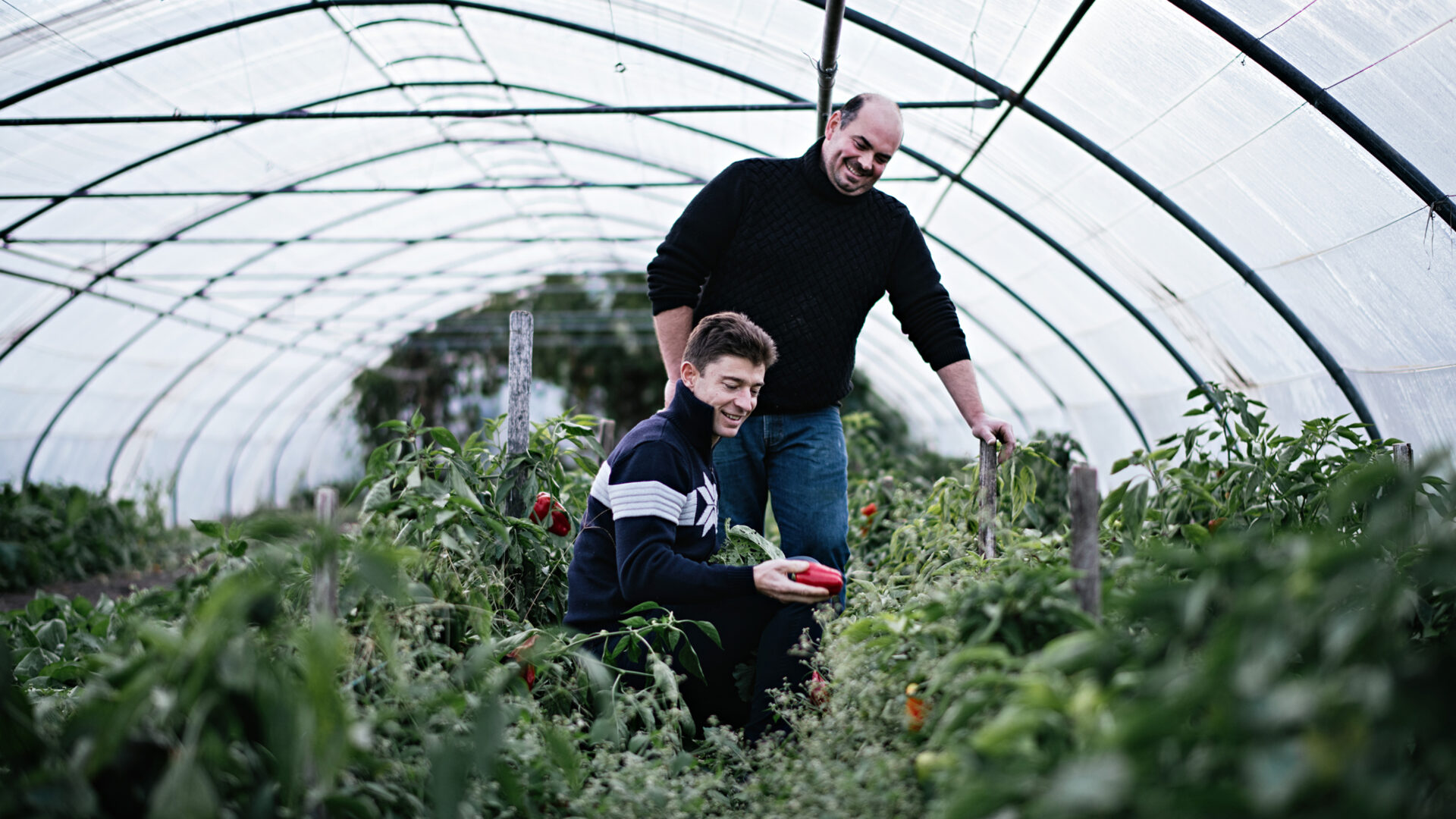
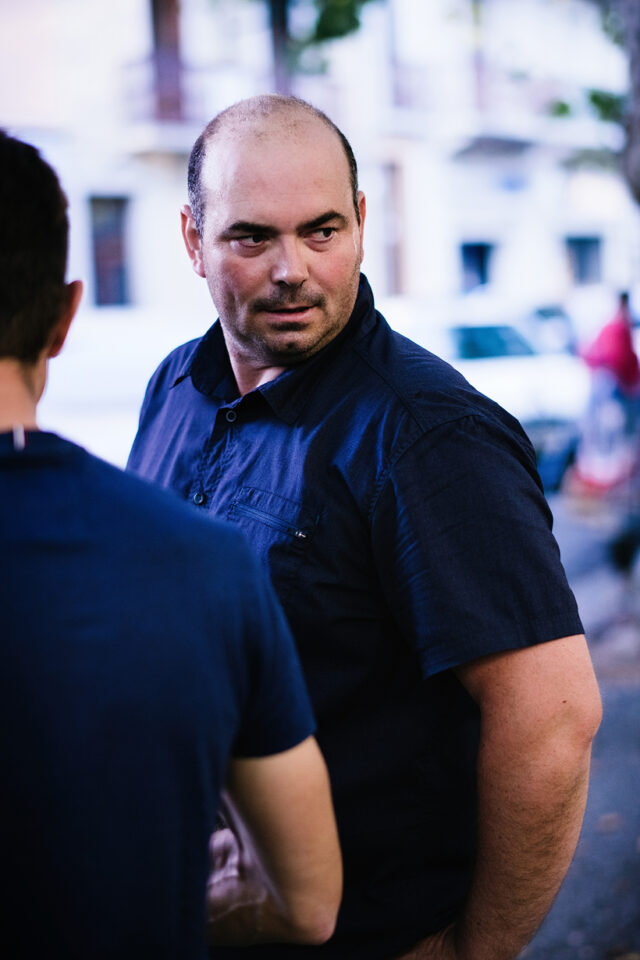
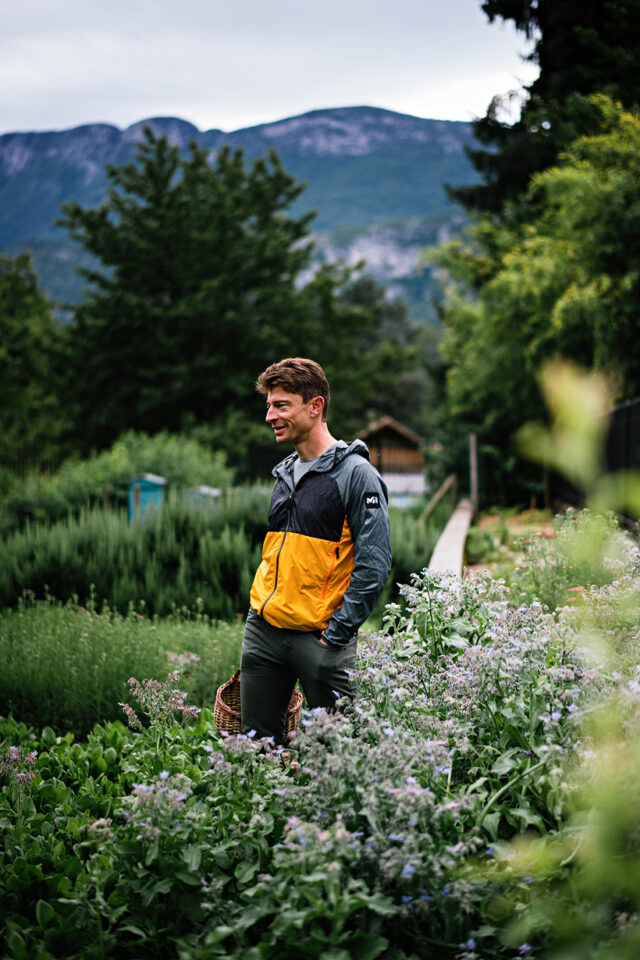
Now Carine and Sébastien Favrin – brother and sister – run the farm, and with knowledge, the ancestral experience continues to bring out of the earth herbs, vegetables and exceptionally cultivated flowers. In Aix-Les-Bains, under the lacustrine influence of Le Bourget, the family century-old plot is rich in light soil where the green people flourish throughout the seasons.
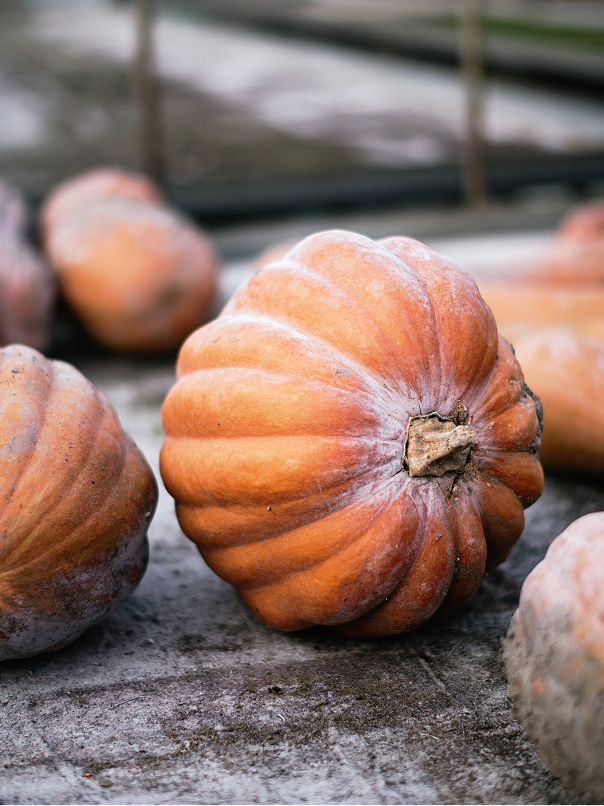
“Through responsible farming the Favrins have always taken great care to preserve the old as well as the new.”
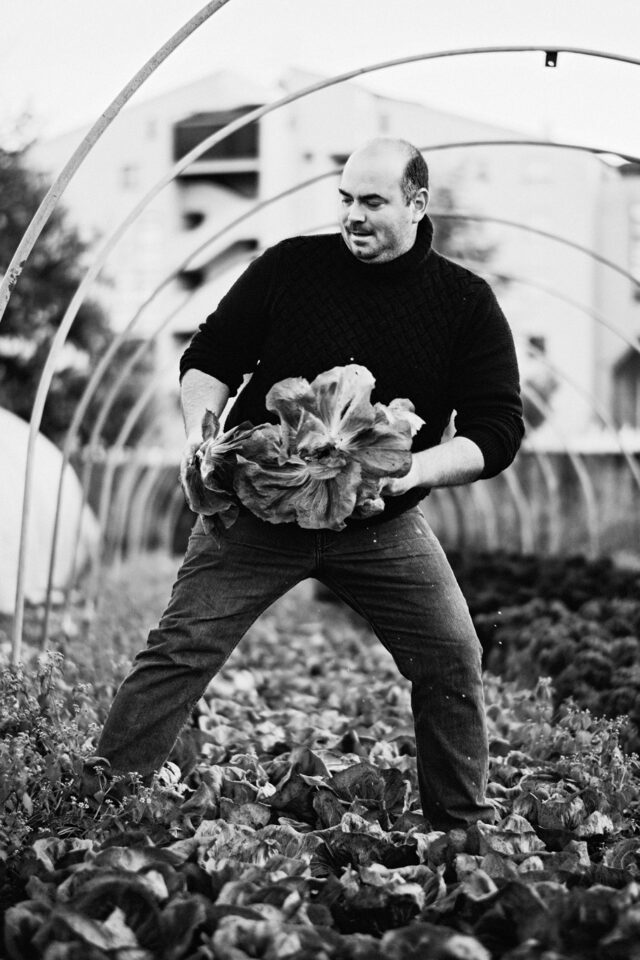

On one side, a so-called classic cultivation of vegetables, and on the other side, a space for more atypical and singular vegetables. And this is why the farm seems immortal, the respect of the traditions combined with that of the discovery, of revival, of moving forward. Pierre has his own opinion on that matter: “Curiosity is not a nasty flaw no matter what you think, on the contrary, we should always try to broaden our palette of tastes. Without this we become dull. It is fortunate that we are a family of travelers, always on the lookout with attentive eyes and ears. Each one brings his experience, his contribution. Together we can work towards a fantastic variety of fruits and vegetables. When you like to eat, you are always on the lookout for new tastes”.
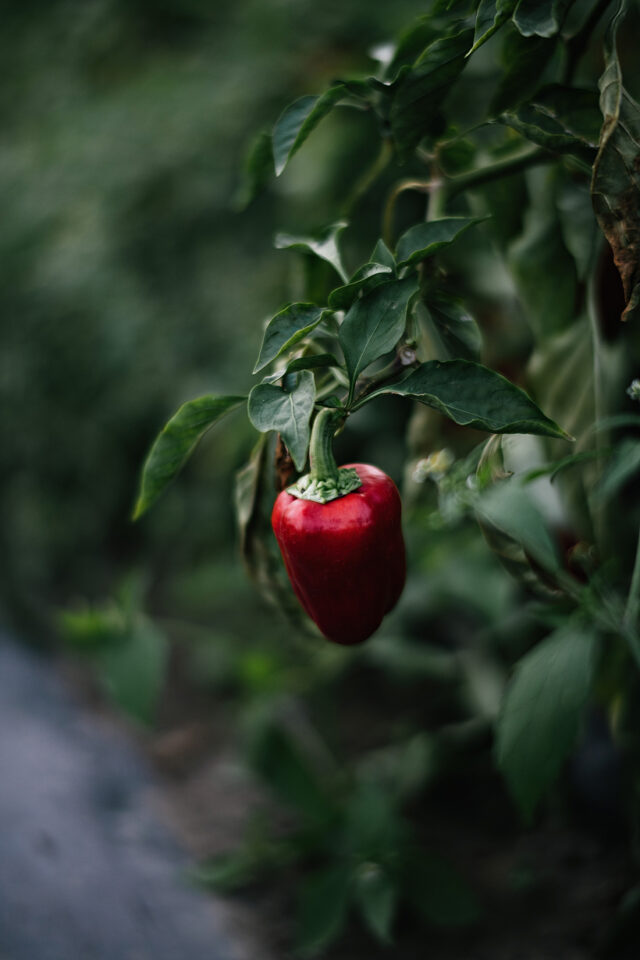
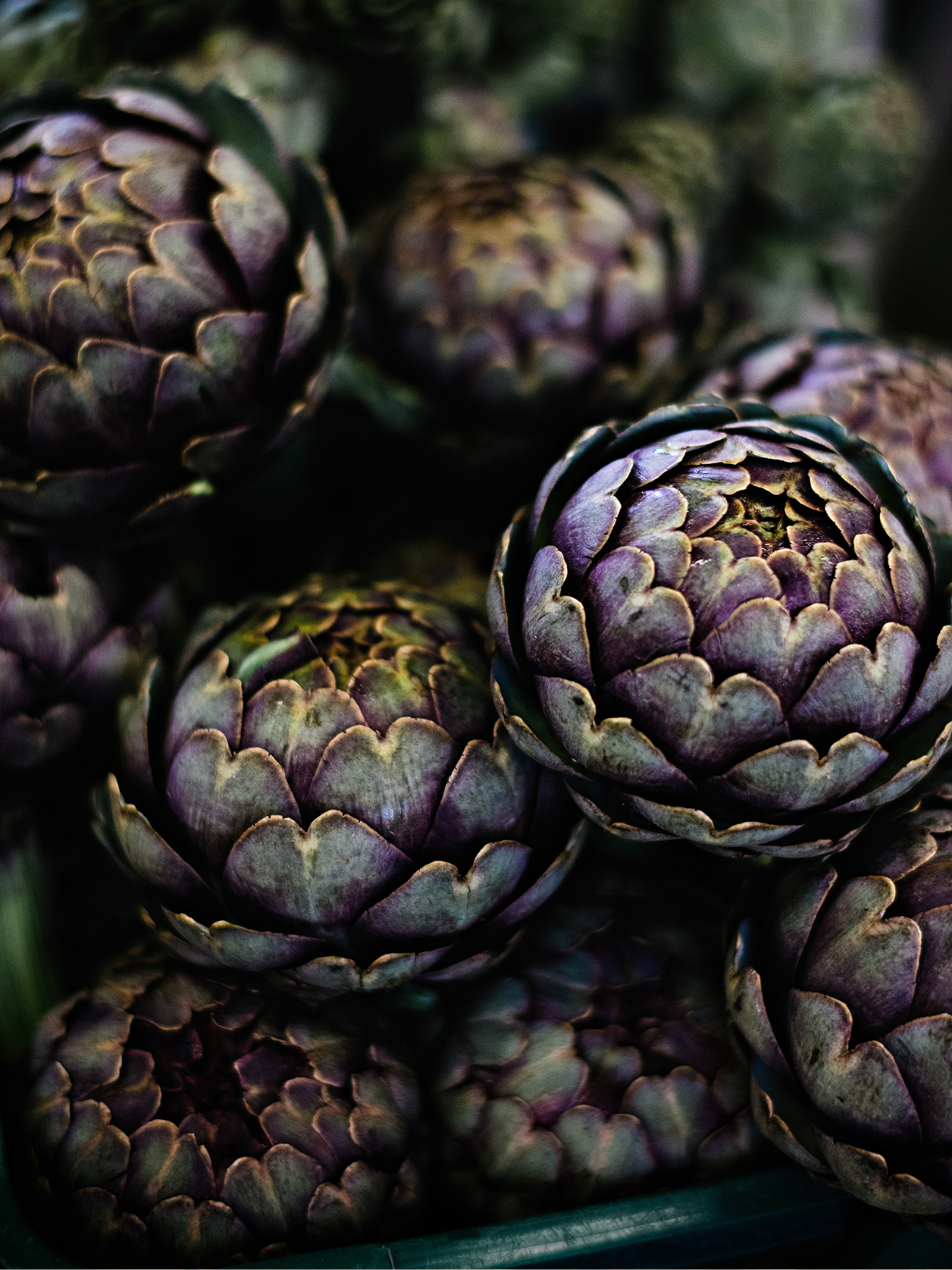
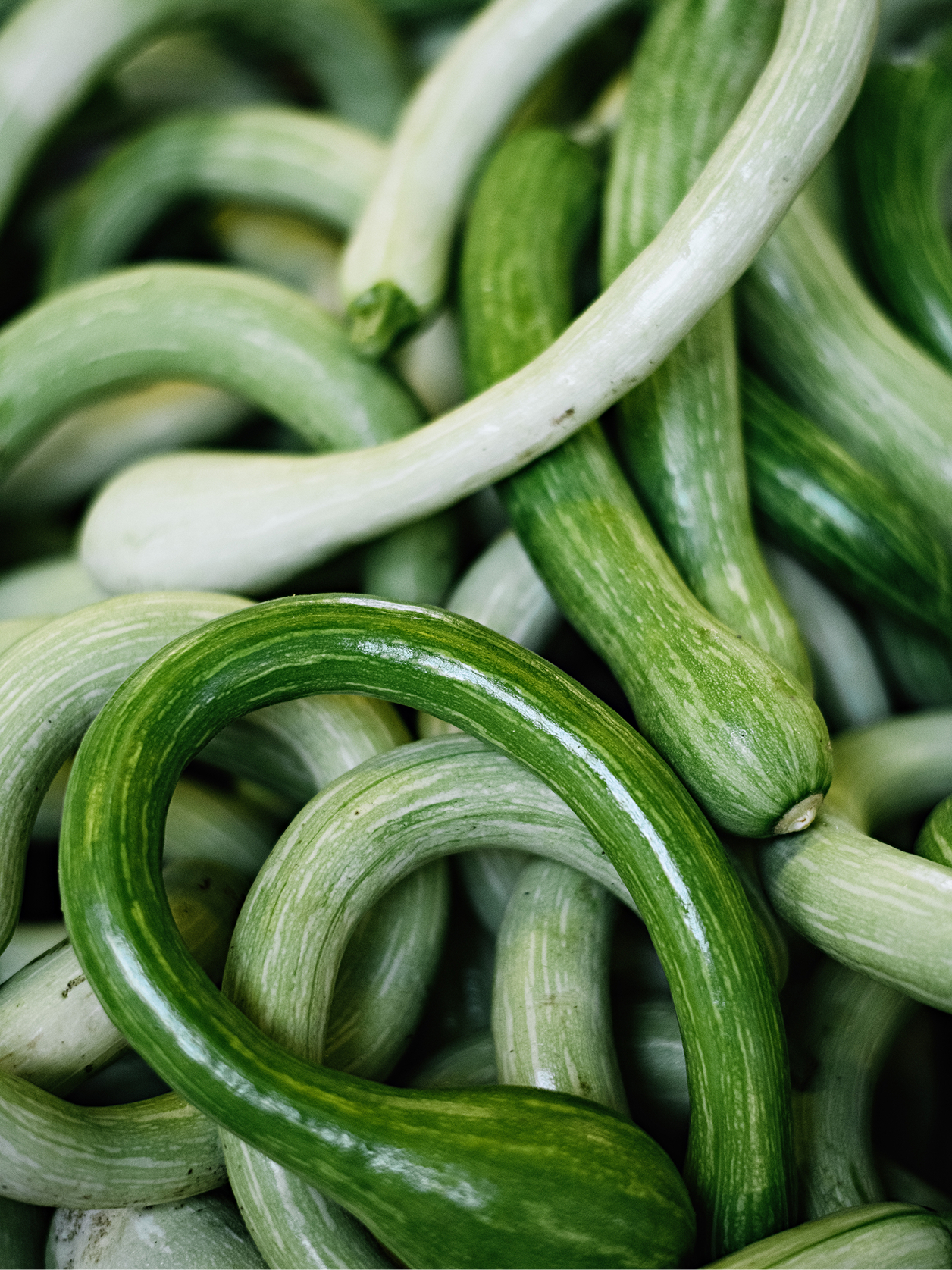
A thirst for curiosity drove the Favrins to offer – from beyond the Savoies – unseen wonders like the Bredy Mafana or Brede Mafane, yellow flowers from the islands of the Indian Ocean with an electric taste, the kind that sparkles in the mouth. The Red Meat radishes from China have a gentle taste, less pungent than radishes. In addition to growing the plant life of overseas countries, the Favrins deeply rooted in the land have always grown the herbs and plants of the Alps, without forgetting similar vegetables: Parsnips, Artichoke thistles, Sunchokes…
The culture of sharing that the Favrin family cherishes speaks to Jean Sulpice. Exchange and connection are important values for each being that aspires to understand the earth; and from there, to bring forth tasty wonders.
“I have had the privilege of working with the Favrin family since the beginning of my career as a young chef. From my apprenticeship with Pierre Marin to the Auberge du Père Bise and my restaurant in Val Thorens. I have been getting my vegetables from them every week for two decades. And the wonder remains. When the right season comes, they have a palette of different tomatoes, of all colors, of all variations. Their haricots crochet (sort of pole beans from Savoie) are unique and delicious, and what about their tasty salads from which we can concoct singular mescluns! And because they are curious and travelers, they help us discover interesting plants for example”
“I take the time to listen because they are the first ambassadors of a nourishing land and they are never short of advice – great ideas. They honor us with the privilege of enjoying their savoir-faire. This is how I got interested in a plant that at first had not left me a remarkable memory. The Artichoke Thistle is an old – fibrous – vegetable. Through regular exchanges and discussions, an idea was born. Now the vegetable is unmissable at my table, an emblem of the gourmet itinerary that we offer our guests”
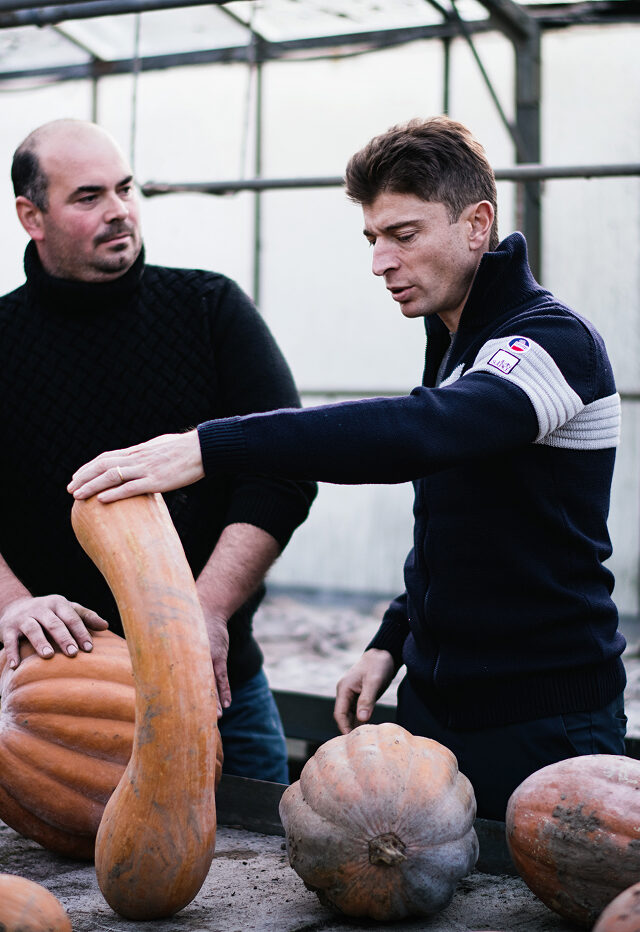
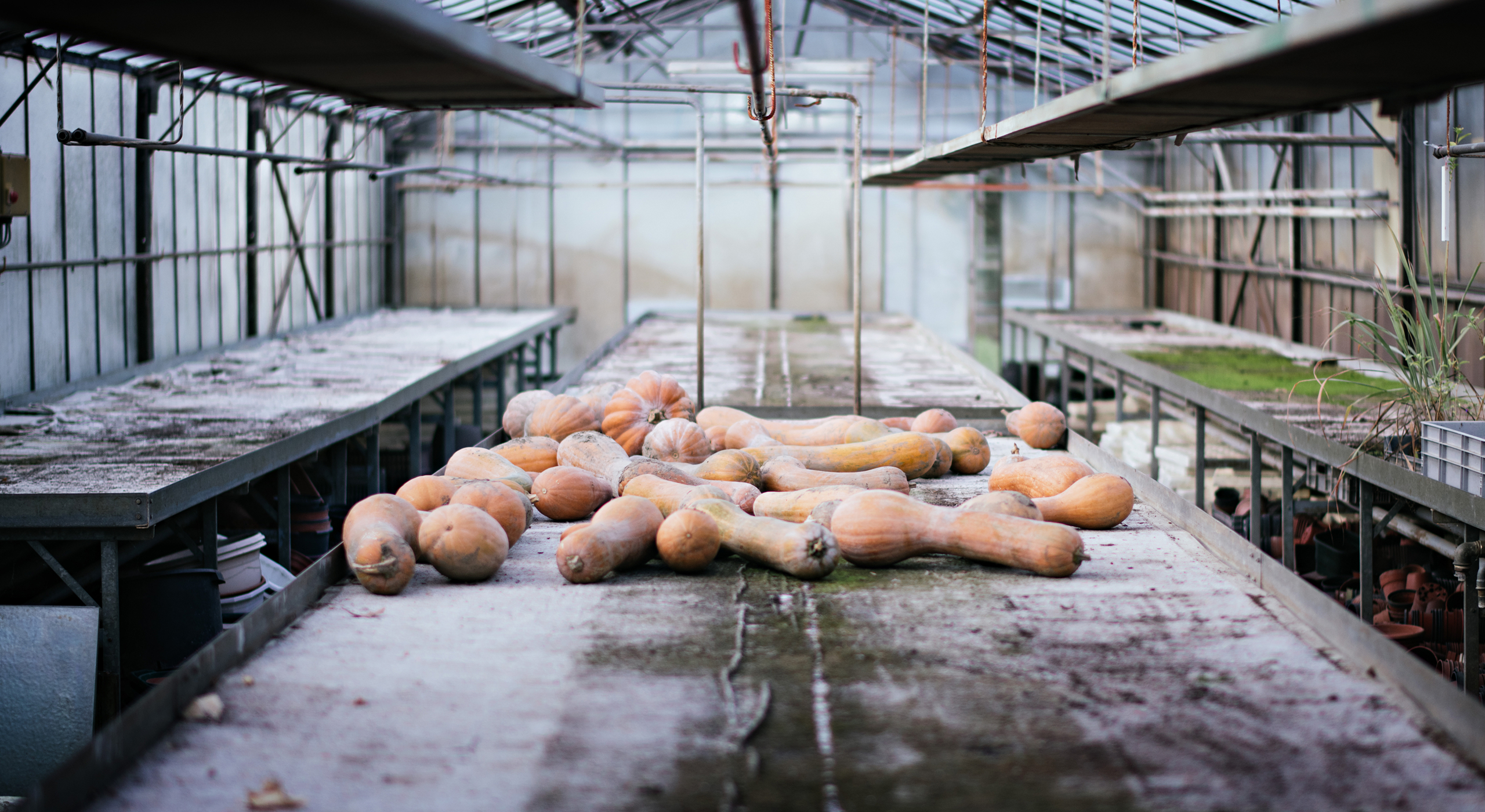
What I like about our jobs, both farmers and cooks, is that we are in close contact with the living world.
The flora and fauna, growing and grower; cultivating and eating bring us together. From the earth to the plate, passing through our taste buds, we work for good food. I would never want these ties to break.
Heirloom vegetables hold a unique place in Jean Sulpice’s cuisine. Not out of nostalgia, much less as a pose, but because they offer a depth that other products don’t always possess. They carry within them a memory of the soil, of repeated gestures, a kind of slowness that compels us to think differently. Their apparent rusticity often conceals great finesse, provided we listen to them.
In his kitchen, these vegetables are never confined to a traditional interpretation. They become fertile ground for exploration. Cardoons, parsnips, Jerusalem artichokes, or forgotten varieties require precise adjustments, sometimes even detours. Some resist, others surprise. Nothing is immediate. This demanding approach reflects his vision of the craft: working with living things, accepting that a product dictates its own rules rather than the other way around.
This work is rooted in a constant dialogue with the producers, in a trust built over time. Observing a variety return, disappear, and then reappear in a different form nourishes culinary reflection. The season dictates, the soil decides, the chef adapts. Is this a constraint or a freedom? Undoubtedly, a bit of both.
By Jean Sulpice
Chef, two Michelin stars
Updated on 16/03/2026