There are some of the riches found in our land that are sometimes overlooked. Not invisible, they have always been there, growing right before our eyes, taking on a new dimension when we remember them fondly. Among them is Crocus Sativus, or saffron, a spice cultivated for millennia. Emblematic yet rarely associated with the Savoy region, discover how and why Cécile Berlioz and Jean Sulpice are working to revive the reputation of Red Gold, once abundant in the Alpine terroir.
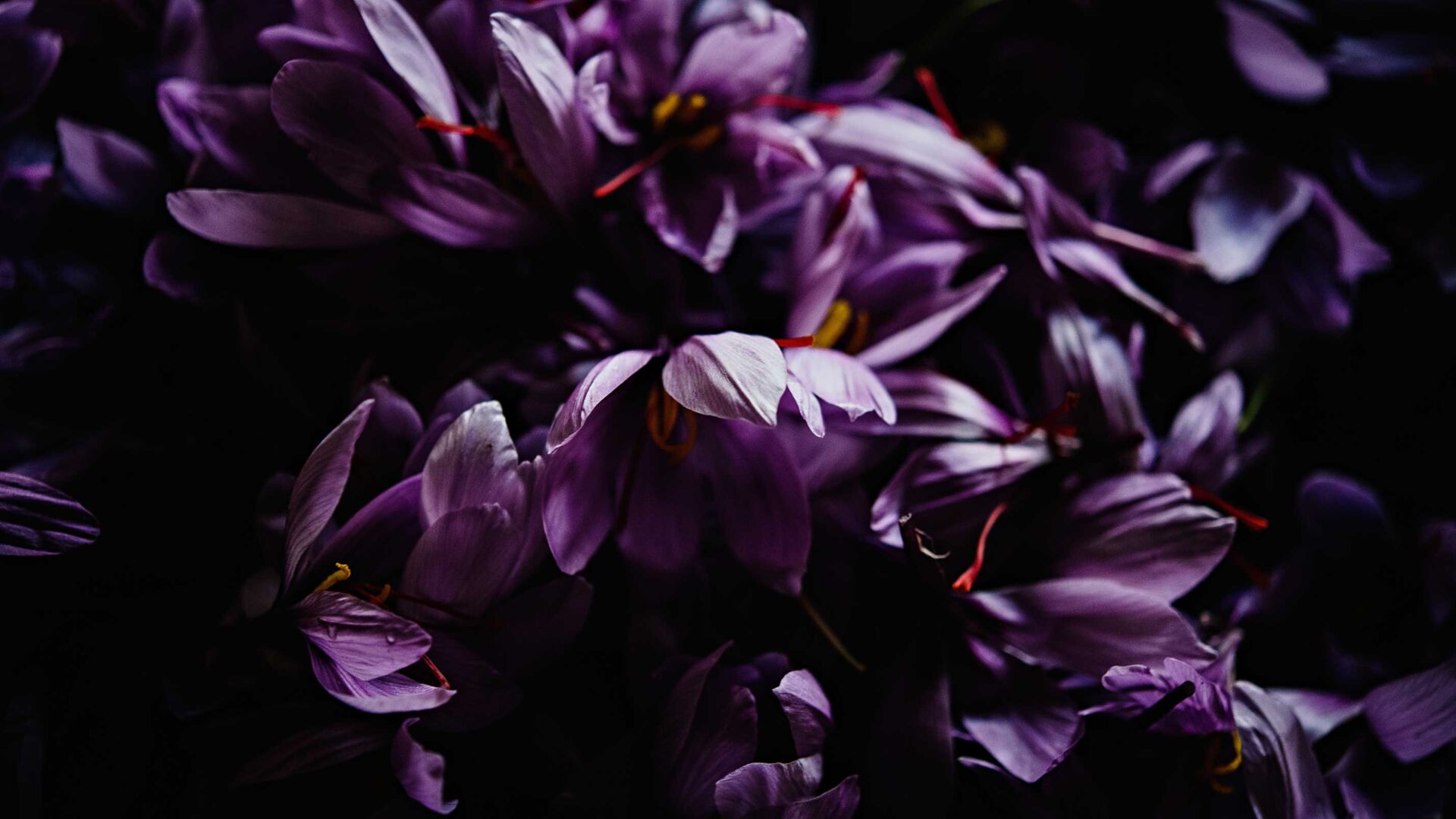
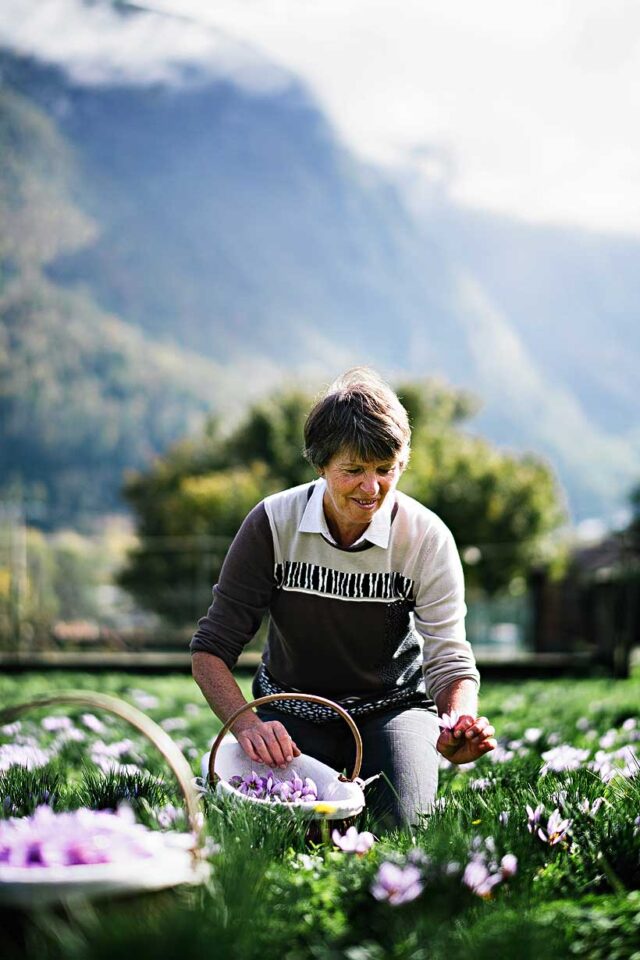
First, it is a strikingly rare color, draped in a certain elegance. A delicate flower from which one manages—from the crocus—to separate the pistil and extract its quintessence: saffron. Cultivated in large quantities abroad, French saffron fields are rare, not to say marginal. Yet, in Saint Pierre de Belleville, in the heart of the Hurtières massif (Maurienne Valley), Cécile Berlioz tirelessly and passionately cultivates this natural caviar.
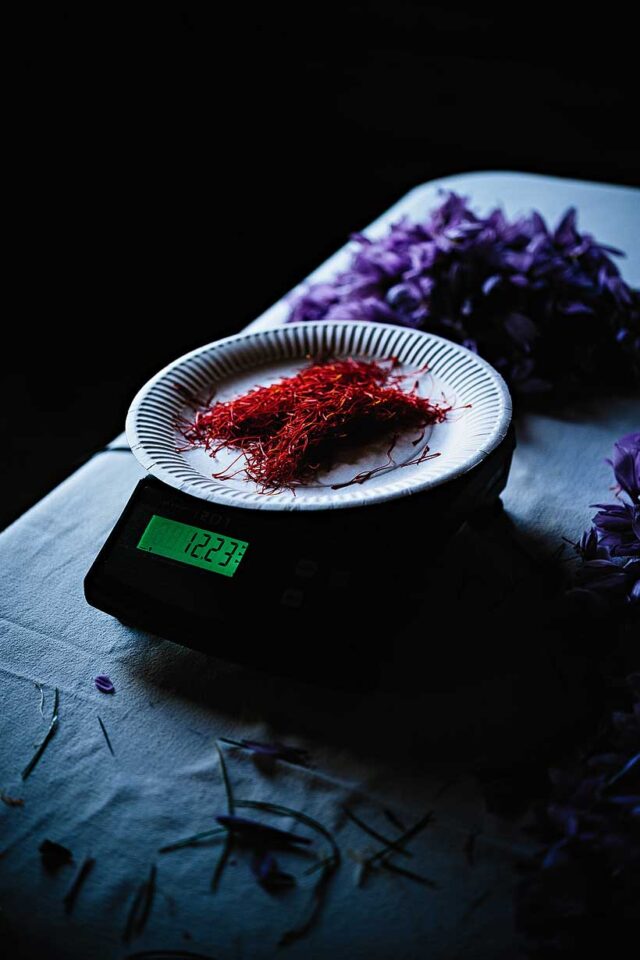
Imported mainly from India, Iran, or Spain, the flower, fragile in appearance, can withstand a wide range of temperatures and adapts perfectly to the mountain climate. So, since 2011, at the Berlioz family estate, before the sun gets too close to Earth, they are busy—between October and November—harvesting the plant’s blood-red stigmas. Thus, it is estimated that a minimum of 180,000 crocus flowers are needed to produce 1 kg of dried saffron. This meticulous, attentive cultivation effort dictates the life of the estate. From planting to harvesting, mechanical automation has no place in this rhythmic process. And for good reason: the hand that guides the action must be supple and patient. Red Gold is so named because it is the result of precious expertise, the passionate culmination of a long and arduous labor.
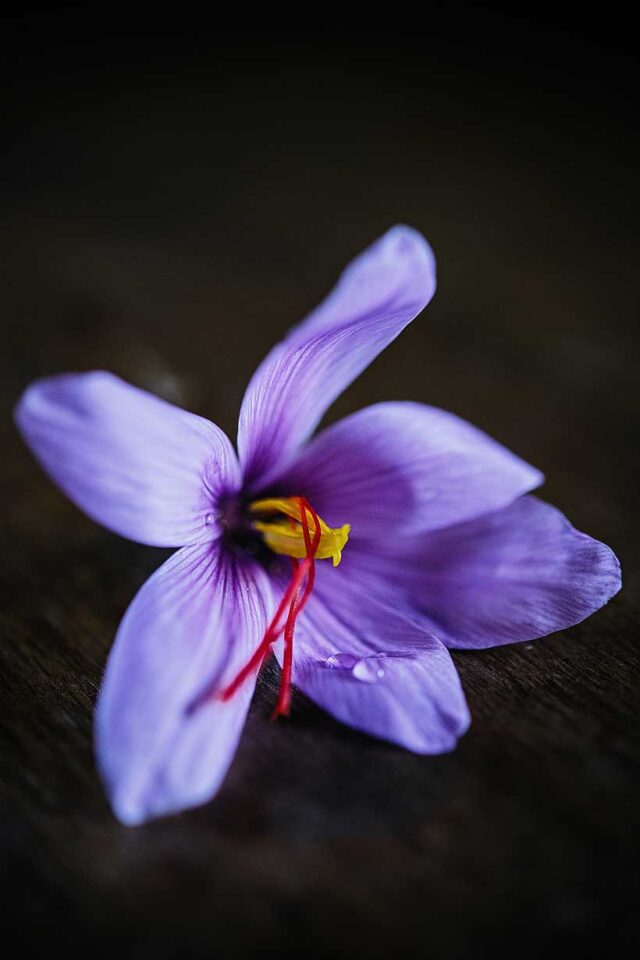
Saffron
Place
Saint‑Pierre‑de‑Belleville
Scent
Woody, aniseed, camphor
Flavour
Spicy, warm, slightly bitter

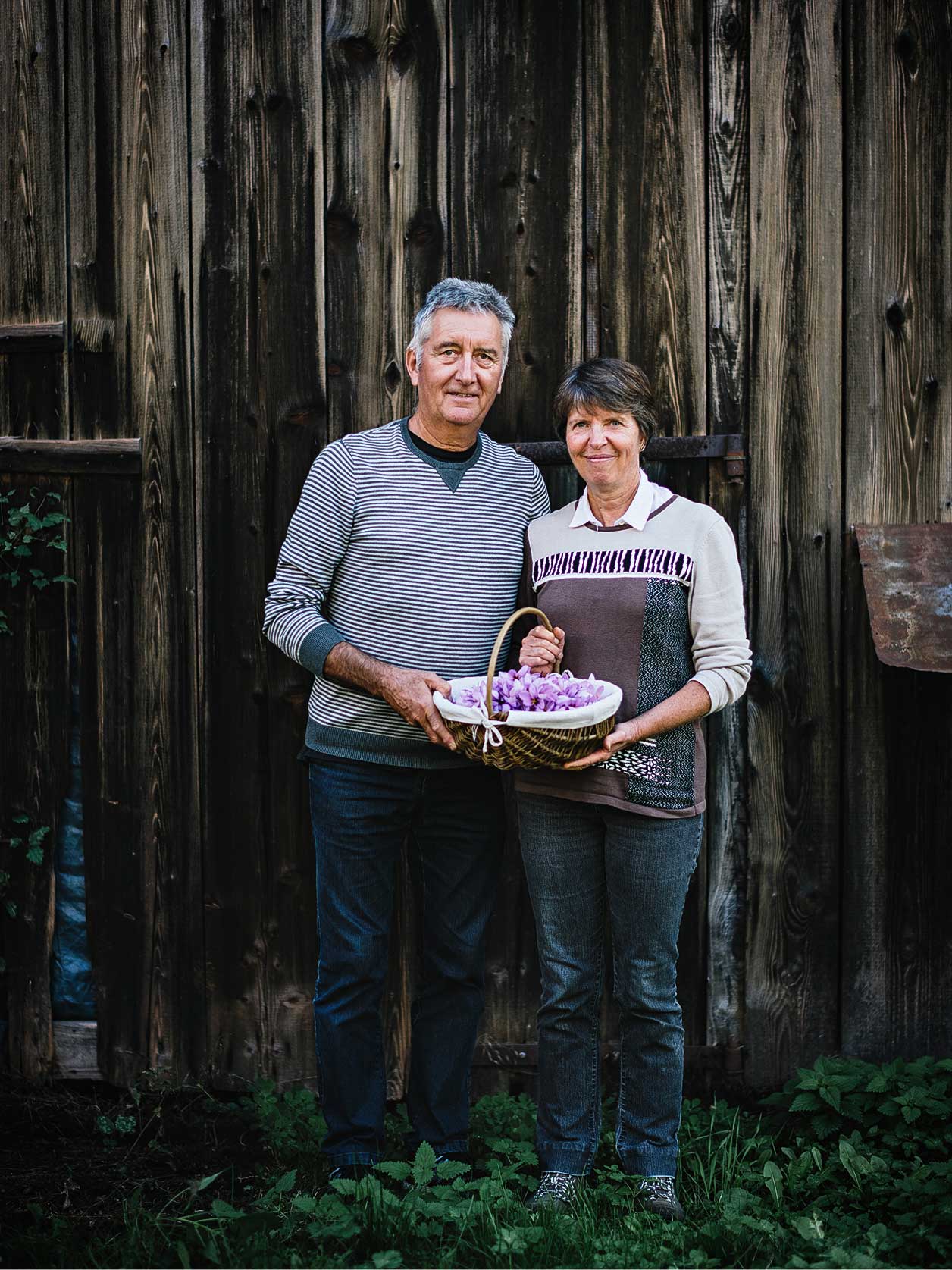
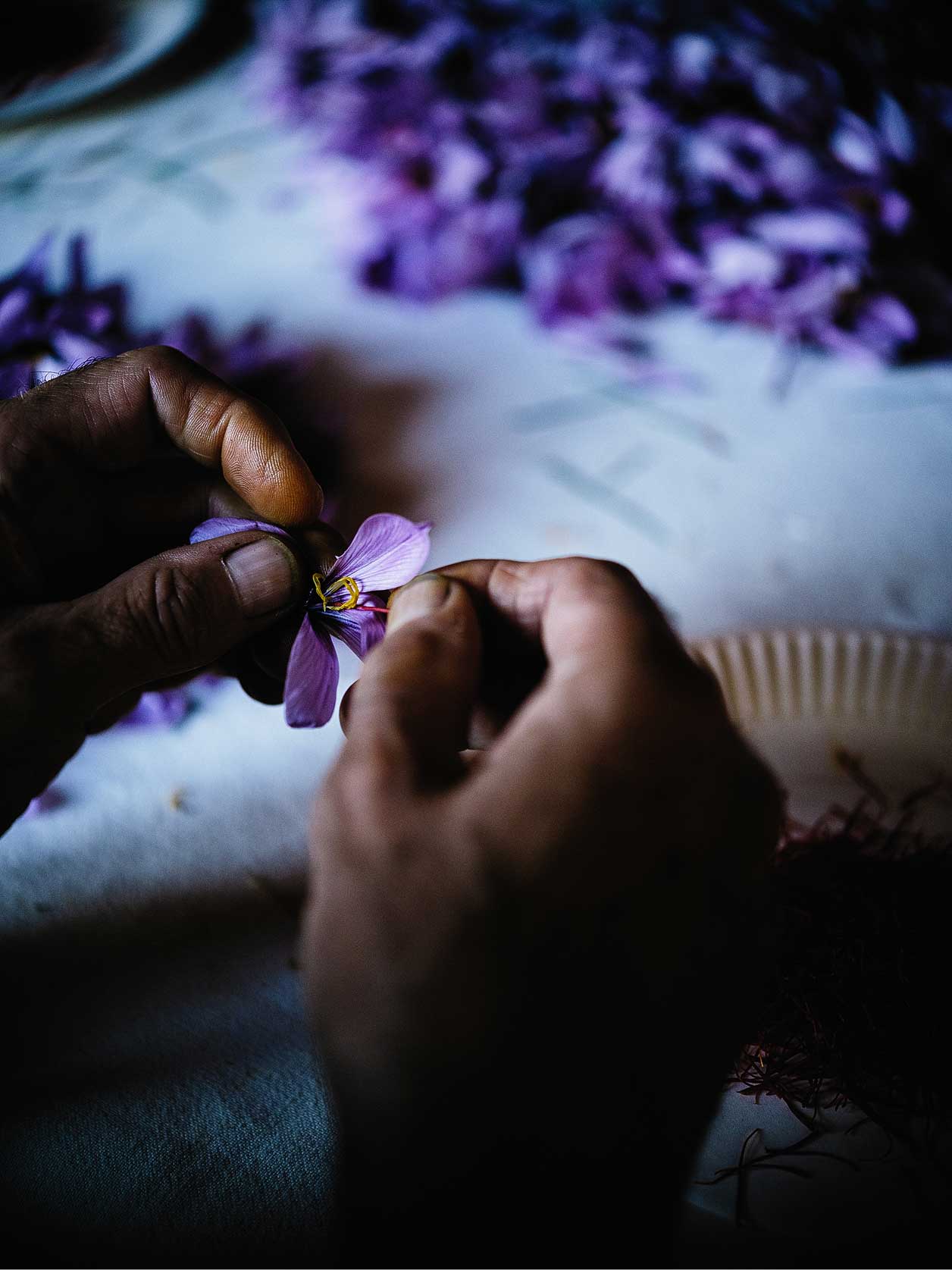
There was a time when saffron was thought to come exclusively from abroad. It was believed that in France, in our own regions, we either couldn’t or didn’t know how to cultivate this noble product, so essential to a cook’s palate. Its cost, in terms of time and effort, is high, which explains the gradual decline in its French cultivation. This has increased the product’s rarity while simultaneously enhancing its quality. Now, the plant is harvested exclusively by a small circle of true enthusiasts.
Saffron has always been present, its benefits accompanying civilizations and generations, both for its flavor and its antioxidant properties. While its French origins are not widely known, numerous writings mention it, as evidenced by the recipes for various specialties from the Savoy region. From one valley to another, its diverse uses in dishes and delicacies are particularly interesting.
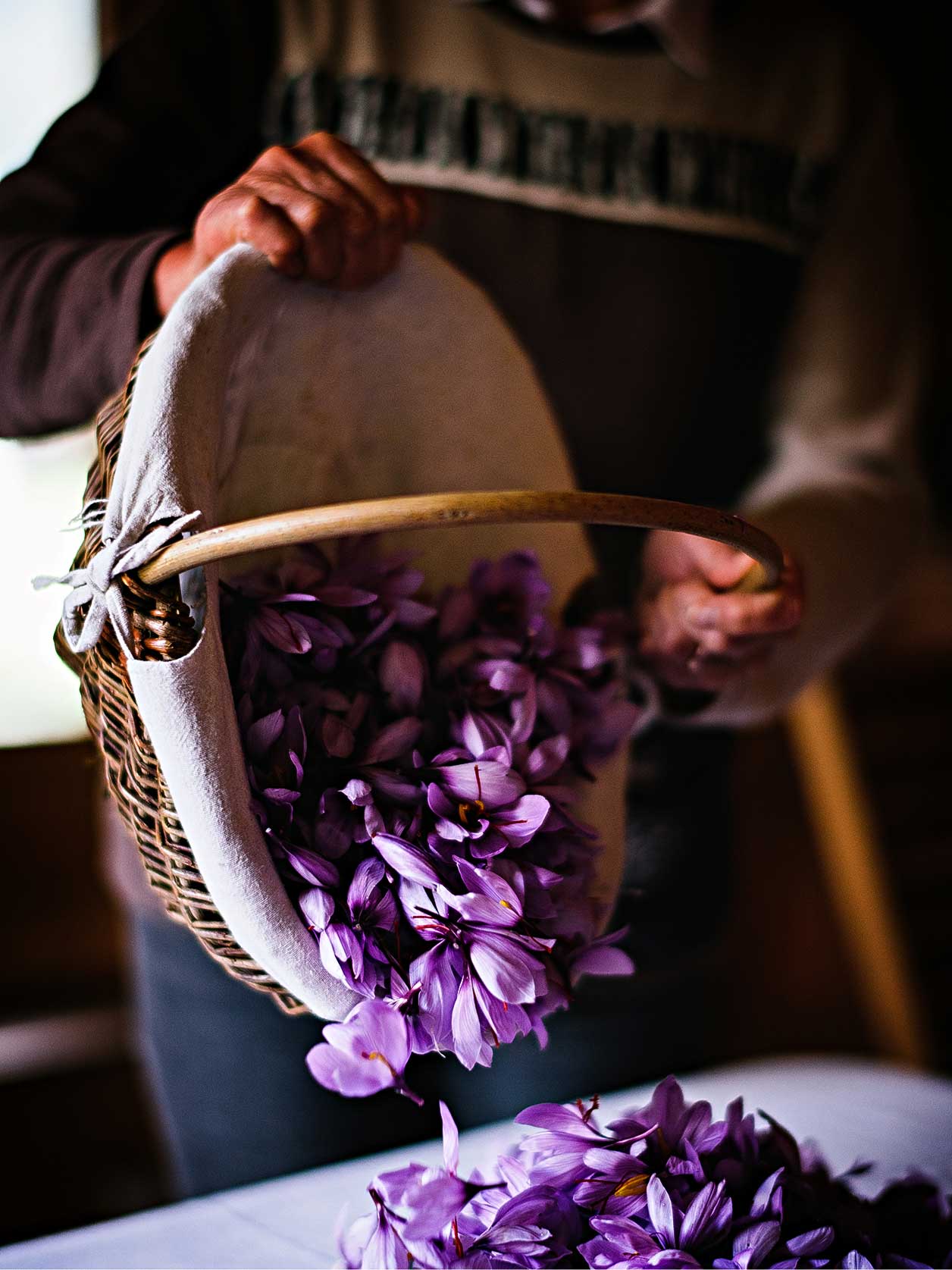
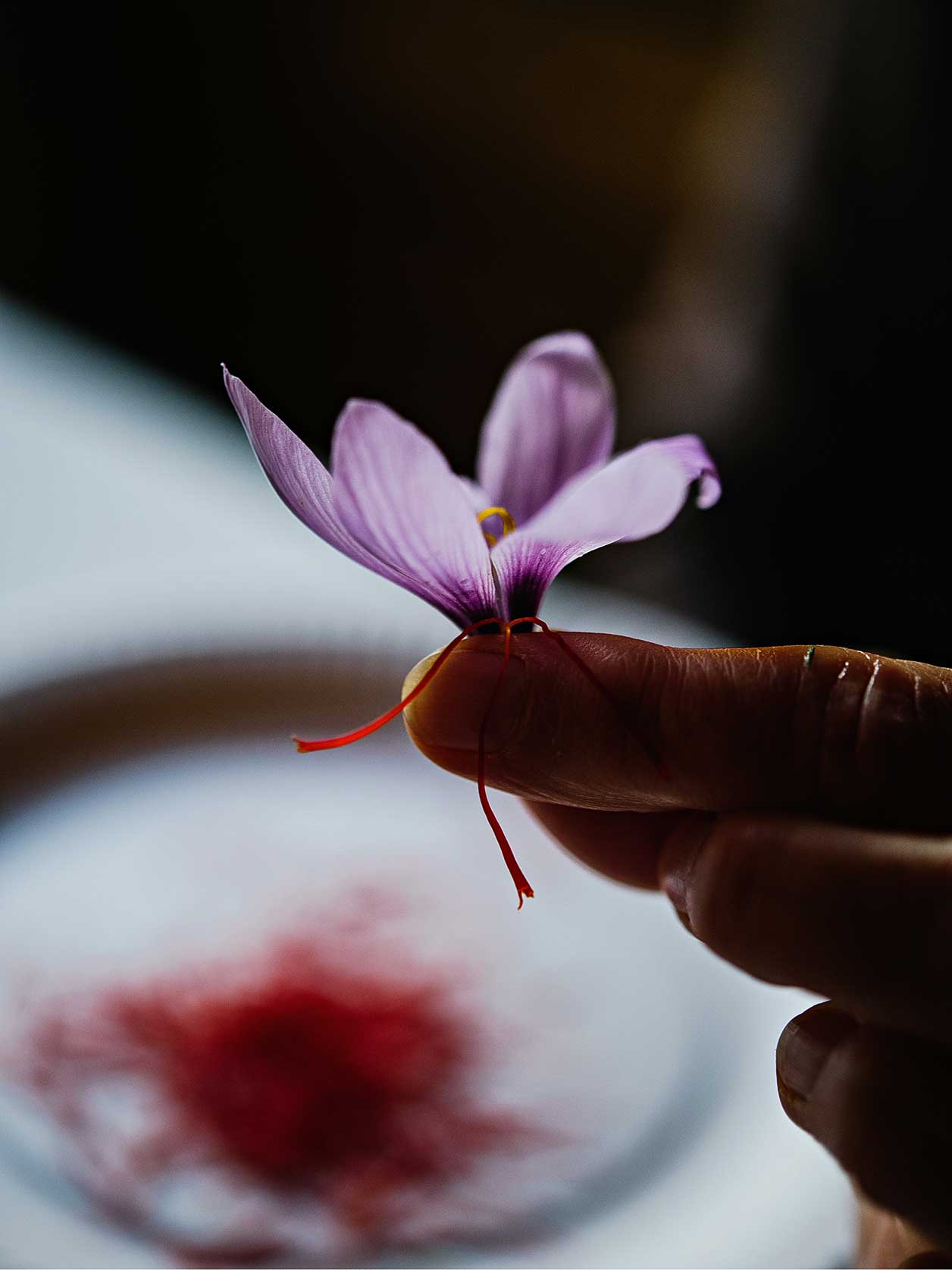
Reintroduced thanks to the meticulous work of Cécile Berlioz, who brought forth the organic saffron of Les Hurtières from her family estate, the spice has regained its former glory in the mountain soil. And, for this glory to be transformed into genuine sensory experiences, it is up to the chefs to delicately perfect this gift of nature. Among them is Jean Sulpice, a native of Aix-les-Bains. He recounts:
“Being from Savoy, I was completely unaware that saffron was produced in this region. Cécile came to see me to explain the work and dedication required to cultivate this Red Gold. I was struck by her admiration for this commitment to reviving this rare flower, which perfectly complements my culinary world. Today, it’s one of those spices I’m proud to use. It’s often associated with savory dishes, especially seafood. Personally, I prefer using it in sweets, where I can bring back traditional recipes from our region. I also enjoy rediscovering some of them, with a touch of naiveté. Take the Baise-Coing, for example, a saffron biscuit from the Arve Valley. When it’s well-made, it’s like a comforting hug. This spice…” It opens up wonderfully sweet dimensions, and when you make a custard tart and incorporate it into the cream, the sweetness becomes all-encompassing.
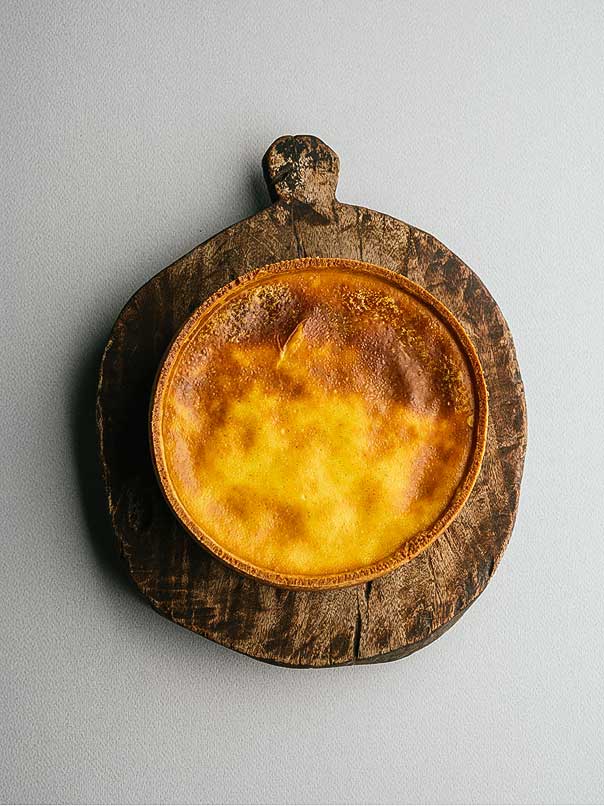
From Rissoles (a Savoyard specialty) to Saffron Crème Brûlée, in Chef Jean Sulpice’s world, Crocus Sativus holds a place of honor. This spice is a specific, high-quality variety, strong, with a pronounced flavor that pairs wonderfully with passion fruit or, more simply, with chocolate. A certain nobility emanates from it, due to its rare flavor and its iconic history—in France—paving the way for a triumphant return to the Alpine regions.
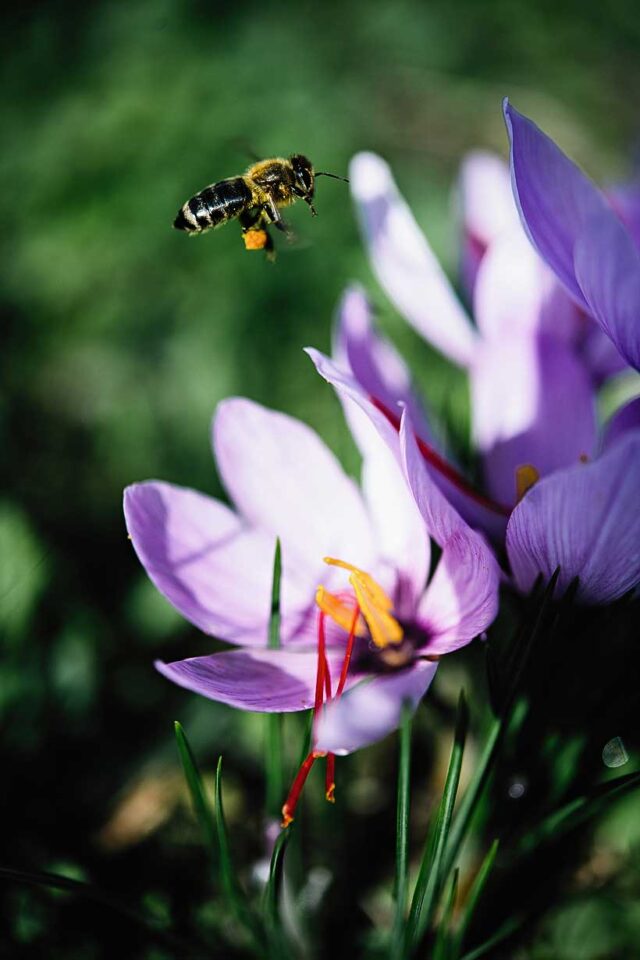
“I was struck with admiration by this desire to rehabilitate this rare flower, so complementary to my world…”
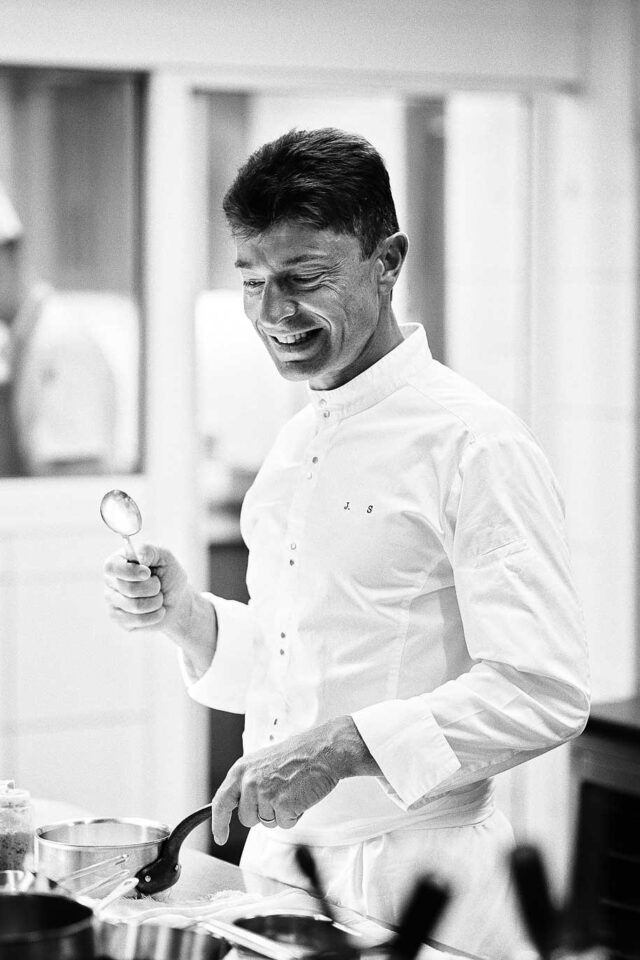

Craftsmen driven by passion, placing nature and its teachings at the heart of their respective projects.
It is ultimately in the desire to preserve manual skills—and even more so—in the authenticity that characterizes the relationship between humans and the land, that Cécile Berlioz and Jean Sulpice found each other. Both give voice to one of the queen spices of our era.
In Jean Sulpice‘s kitchen, saffron brings a rare intensity. Its precious red threads infuse slowly, releasing a unique aromatic depth. Saffron cultivated in Savoy finds its natural expression here, resonating with a cuisine attentive to its Alpine roots. It inspires a delicate reinterpretation of traditional specialties. A classic biscuit takes on a new vibrancy, a cream is enlivened by a subtle warmth, and a dessert becomes an exceptional combination of flavors, such as the saffron and vanilla custard tart. The red of the crocus becomes an imprint, almost a guiding thread, linking the culinary memory of the valleys to a precise and sensitive contemporary style.
Through this spice, the gastronomic cuisine reinvented by Jean Sulpice draws its inspiration from a terroir that asserts itself with character. The technique remains measured, the ingredients respected, and emotion arises from this union of the rarity of saffron and the precision of the dish. From the crocus fields of Les Hurtières to the shores of Lake Annecy, the same energy flows. It is the energy of a vibrant region, proud of its resources, whose ancient flavors find a luminous and profoundly embodied expression today.
By Jean Sulpice
Chef, two Michelin stars
Updated on 16/03/2026