Only a handful of farmers still dare to make this cheese from the Haute-Maurienne valley, on alpine pastures where Tarine cows produce the milk essential to its production. We meet one of these rare Savoyard producers with Jean Sulpice, a Michelin-starred chef.
It was yesterday. It was a century ago. An Indian summer in the Haute-Maurienne valley. We were a bunch of wild kids, overgrown teenagers discovering the Vanoise National Park. Fueled by the stories of the mountaineer and writer Roger Frison-Roche (1906-1999). We were wearing monumental leather Super Galibier boots with red laces, which had swallowed up our summer job earnings. We were as proud as Punch, and there was no way we were going to admit that our boots were killing us. It has to be said that we were discovering the mountains with the certainties of those on the cusp of adulthood. As incapable of reading an IGN map as we were of telling a mountain goat from a chamois. But it didn’t matter; we wandered along the ridges with a newfound sense of freedom. And the luck of our youth always placed a mocking guide in our path, who would set us back on the marked trail and who, one evening, led us to an alpine farm. There, we drank warm milk straight from the cows’ udders. What followed felt like a proper deflowering when the farmer’s wife offered us thick slices of large, generously split loaf of bread, spread with butter from her Tarine and Abondance cows. A century later, we can still taste the nutty flavor of that milky delicacy on the tip of our tongues. In the morning, we went to thank her while she was handling ivory-colored tommes in a tiny cellar. She pointed to one: “You’ll come back this winter to taste my blue cheese.” Her prophecy, alas, did not come true. But she still haunts us like the cheese she mentioned: the bleu de Termignon which, at the time, was for us only the name of a quiet Savoyard village where we had tasted the warming joys of génépi.
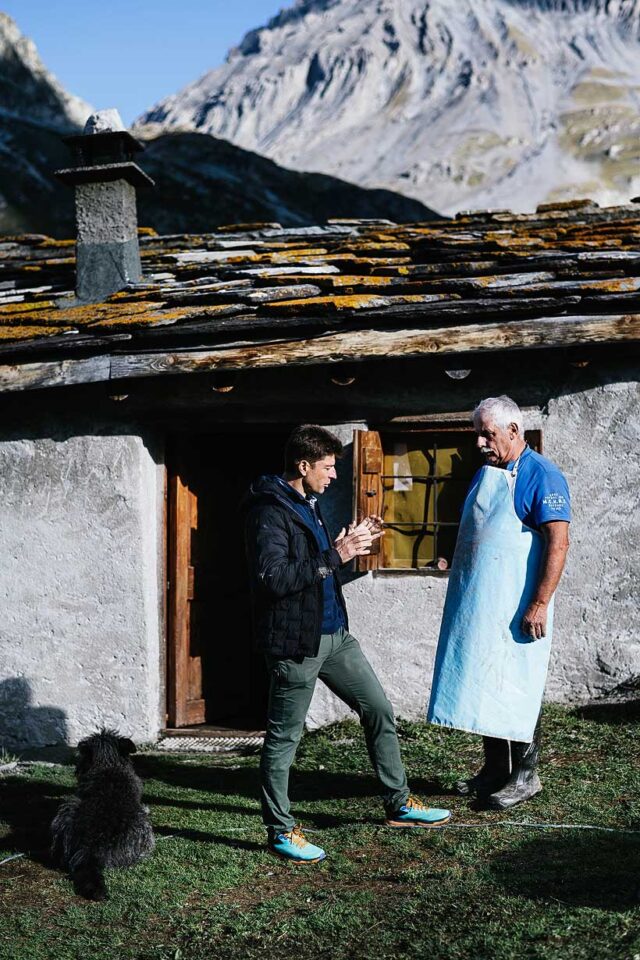
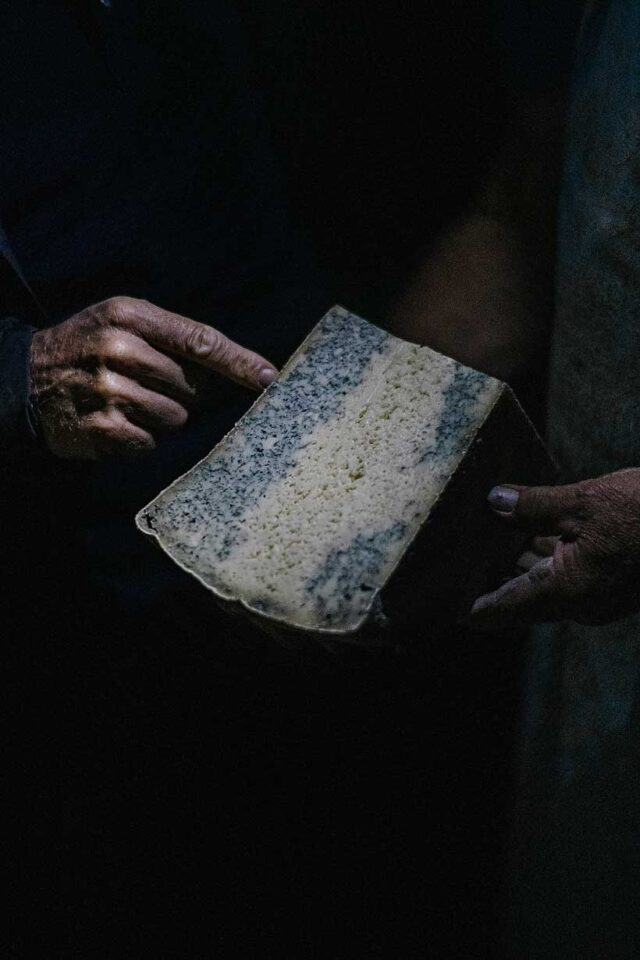
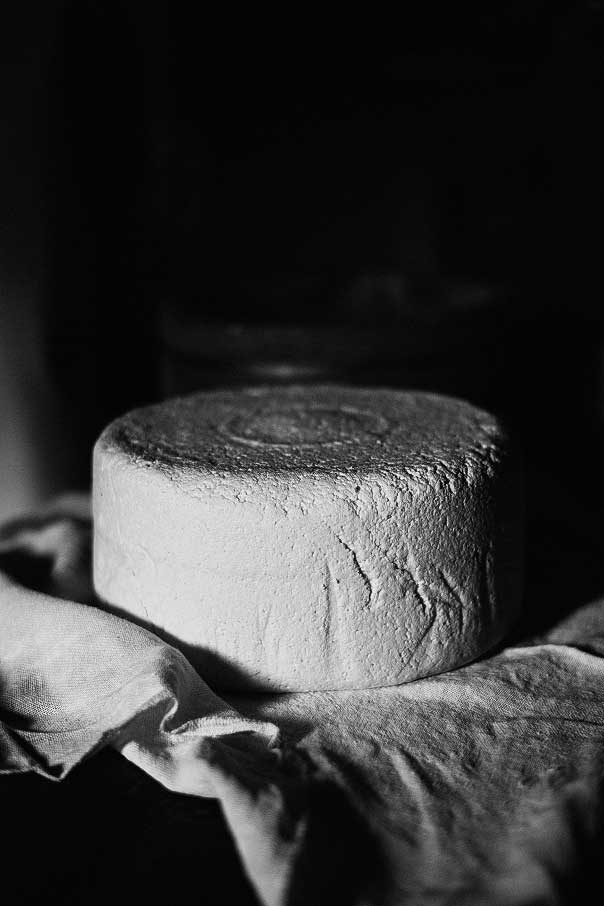
Termignon blue cheese is much more than a cheese: it’s a legend intertwined with the quest for the Holy Grail and the hunt for the dahu. So rare, so precious, that for a long time this blue-veined cheese, at once granular, rich, and melting, was thought to be impossible to find. In short, unique. The blue veins appear beneath the rind, uncertain and magnificent like the azure sky and the sea at a Levantine dawn. Sometimes, they form clouds on the creamy cut surface; other times, veins, dots. The lord is sovereign, indomitable; only a handful of producers still dare to try, tenacious and tireless when they make it during the summer in the high pastures of Haute-Maurienne. Termignon blue cheese is the true heart of the cheese world. Fiercely free in its high mountains, it benefits from no protected designation of origin or labels that are the pride of other cheeses, who boast of them like dignitaries of the Legion of Honor. It has something better: it has the memory of the women and men devoted to it. It is said that Bleu de Termignon has been produced since the 18th century. That it was always appreciated on the other side of the border, in Italy, just a stone’s throw away. That it was also called Maurienne, Persillé du Mont-Cenis, or even Bleu de Bessans.
For a long time, it was glimpsed between Christmas and March on a few rare cheesemongers’ stalls. Without really believing it. Without tasting it because perhaps we had waited too long. We had to sit down at the table of a great Savoyard chef, Jean Sulpice, to truly appreciate Bleu de Termignon. Because one doesn’t address an icon so fervently as an “tu” (the informal “you”), it would diminish the desire. And above all, we followed in Jean Sulpice’s footsteps to explore the highlands of Termignon blue cheese. For the Michelin-starred chef of Auberge du Père Bise has an unquenchable need to absorb everything he cooks by immersing himself in the local terroir alongside the producers.
Region
Savoie
Milk
Cow
Paste
Blue-veined
Altitude
2000 m
Legend has it that Charlemagne passed through here in 768 and tasted some Termignon blue cheese.
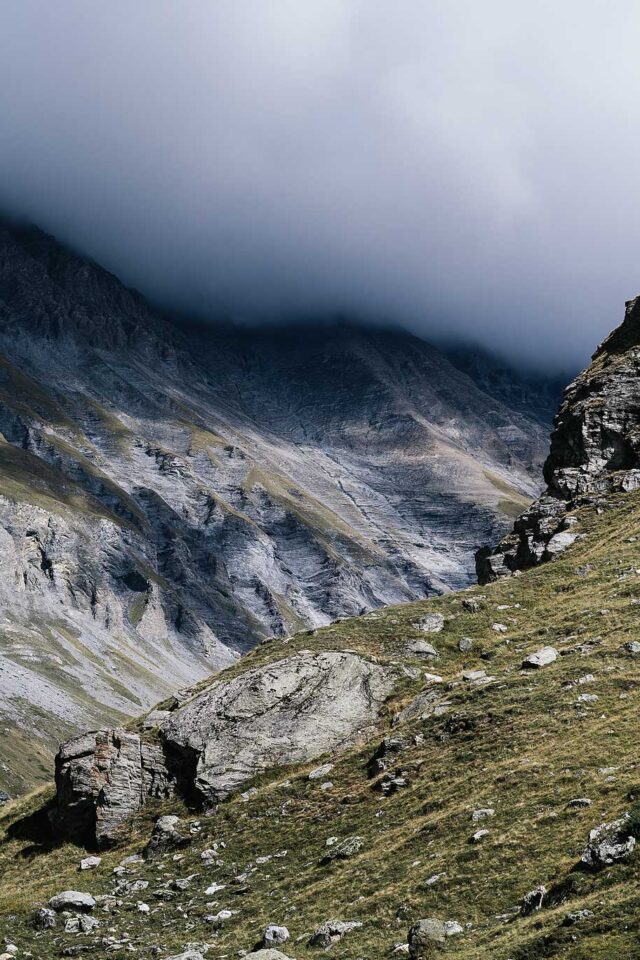

So here we are, on a rainy autumn day, leaving the shores of Lake Annecy to head towards the Haute-Maurienne valley. In the breaking dawn, we climb up valleys where large, black clouds fiercely embrace the peaks. In Termignon, we warm up with a flurry of espressos at the welcoming Bock à Vin café. Before tackling the end of the world. A maze of small, steep roads that narrow as it begins to snow lightly. Suddenly, the sun and a snow-covered summit meet between two canopies. But the unknown is even higher. In its grey and russet valleys that seem to have sprung from a Siberian tundra, where a kind of small lake forms a grey blade beneath the blue sky dotted with white. Here, we feel like rereading Jack London, Jean Giono, Bernard Clavel.
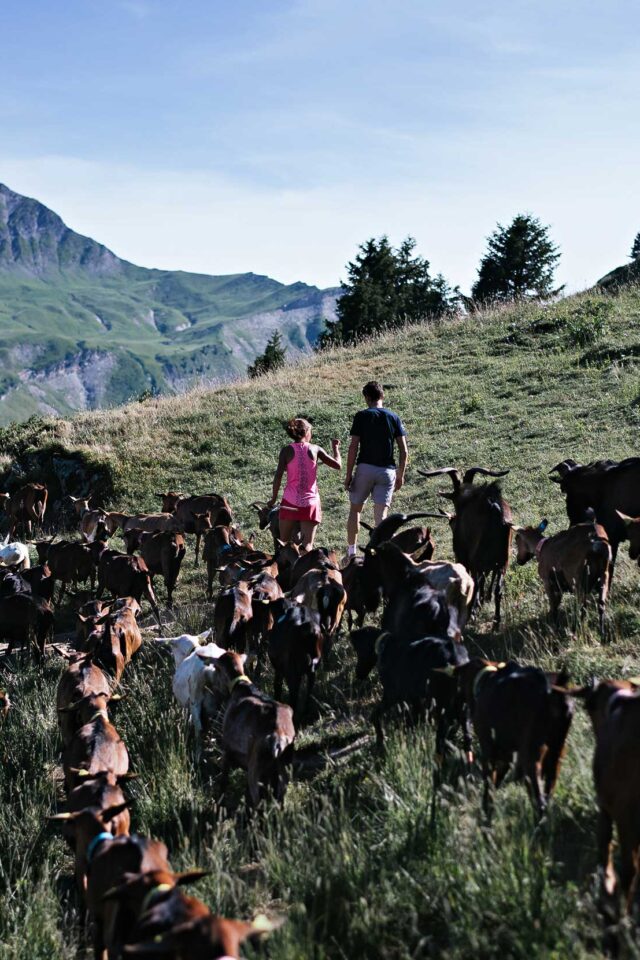
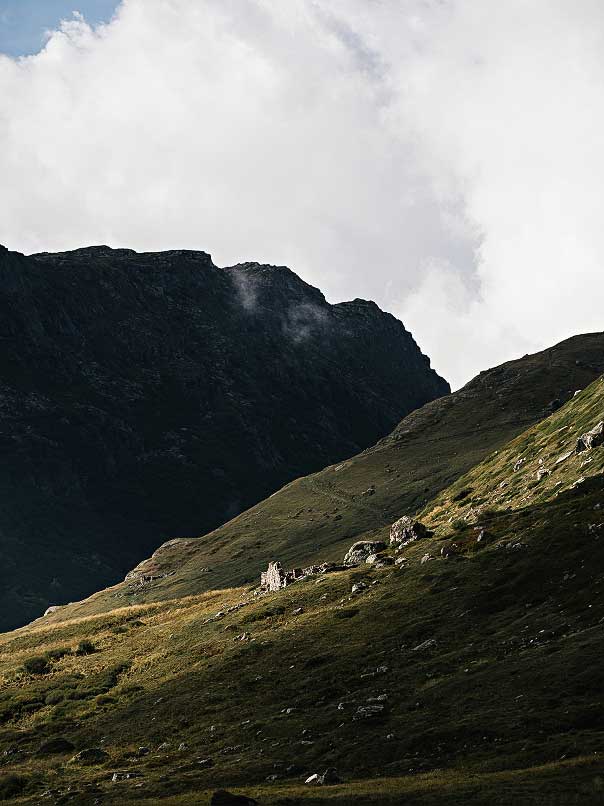
The car must be parked to continue on foot. The Vanoise National Park does not tolerate motorized intruders. A dirt and gravel path winds beneath the placid gaze of Tarine cows with brown horns and beautiful tawny-brown coats. Walls of large stones can be seen, upon which timber frames have collapsed. But human life is still present here (for how much longer?) as the scent of manure and wood smoke fills the air as one approaches a cluster of gray buildings with thick walls covered in flagstones, their surfaces tinged orange by lichen. Catherine Richard’s farm is nestled here in the locality of Entre-Deux-Eaux. More than half a century ago, she first rode up here on horseback, as her ancestors had done since the beginning of the 19th century. She was six months old. There was no road. There is still no running water and the place is not connected to electricity. Only a generator makes milking the cows easier. She grew up watching her mother make her Bleu de Termignon cheese while her father harvested hay lower down. Then, she took over this demanding and solitary work in the silence of the mountains, at an altitude of over 2,000 meters.
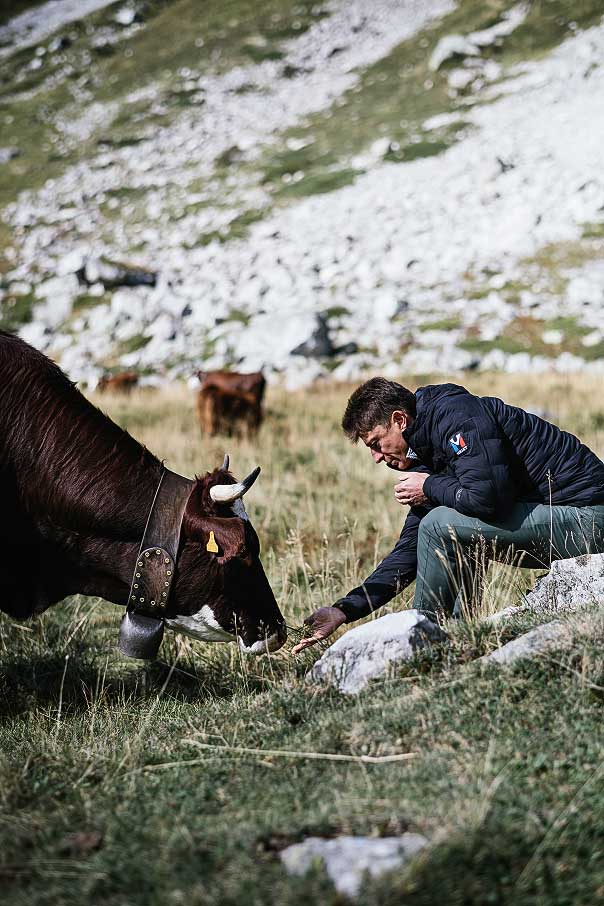
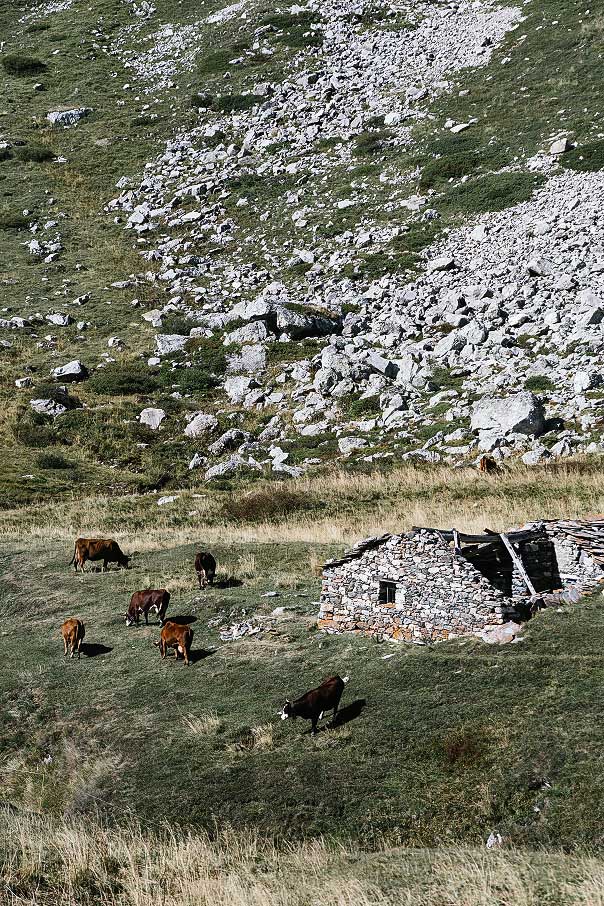

In 2019, Catherine, her partner Jean-Jacques, and their herd of about twenty Tarine and Abondance cows returned to their mountain pasture on June 8th. Imagine their herd grazing freely beneath the summit of the Grande Casse (3,855 meters) in the pristine alpine garden that is the Vanoise National Park. The animals feed on an incredible variety of grasses and flowers (more than 1,700 species). Among the treasures found there are those with beautiful names, such as glacier sedge, arctic rush, boreal tofieldia, woolly yarrow, variegated aconite, and summer adonis. All of this produces a unique, high-quality milk, essential for making Bleu de Termignon cheese.
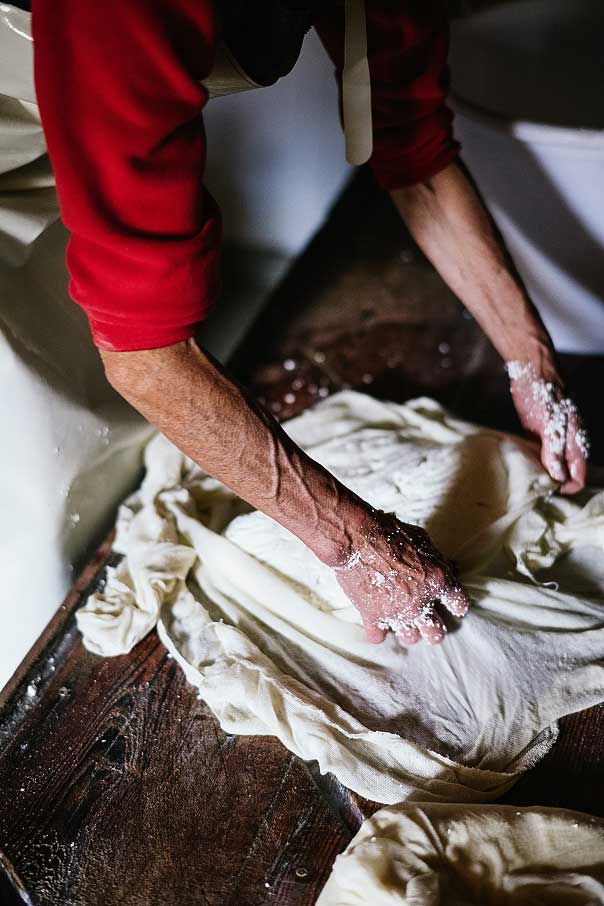
During the four summer months, the ritual remains unchanged. At 3:30 a.m., Catherine begins making her cheeses by the light of her headlamp. The cows need to be milked. She mixes the morning’s milk with the previous day’s in a copper vat and heats it to 35 degrees Celsius before adding rennet from the calf’s abomasum (stomach). The milk will curdle for forty-five minutes. Then she takes the curd cutter, a cross between a rake and a metal broom, with which she cuts the compact mass of milk to obtain curd grains the size of corn. She places a linen cloth at the bottom of the vat, trapping the curd, which will drain slowly. Catherine then cuts it with a knife and puts it through a hand-cranked grinder. She adds another curd that has soaked for forty-eight hours in acidified whey. Then she molds her cheeses, which will dry and be turned every day before being salted. Everything takes place in low-ceilinged rooms where light filters in weakly through narrow windows.
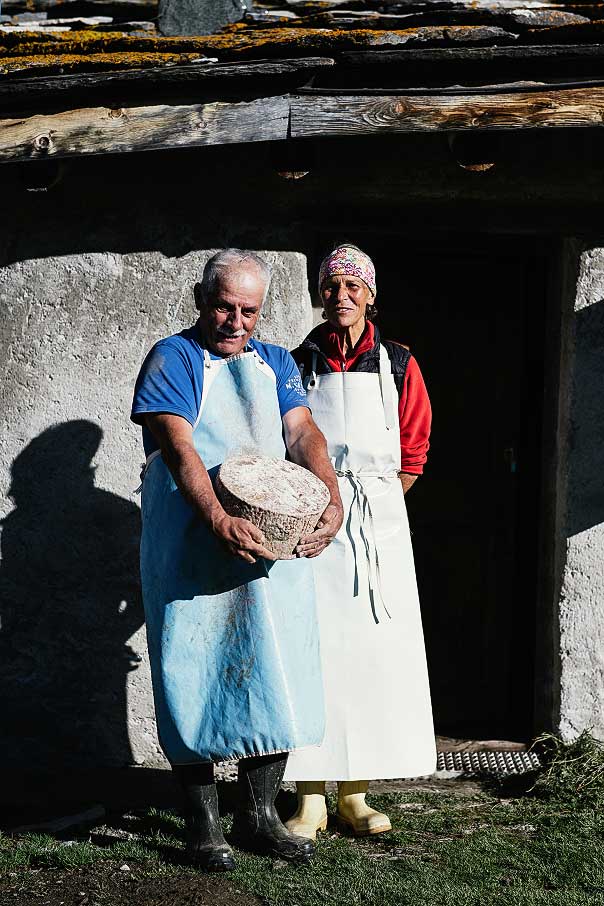
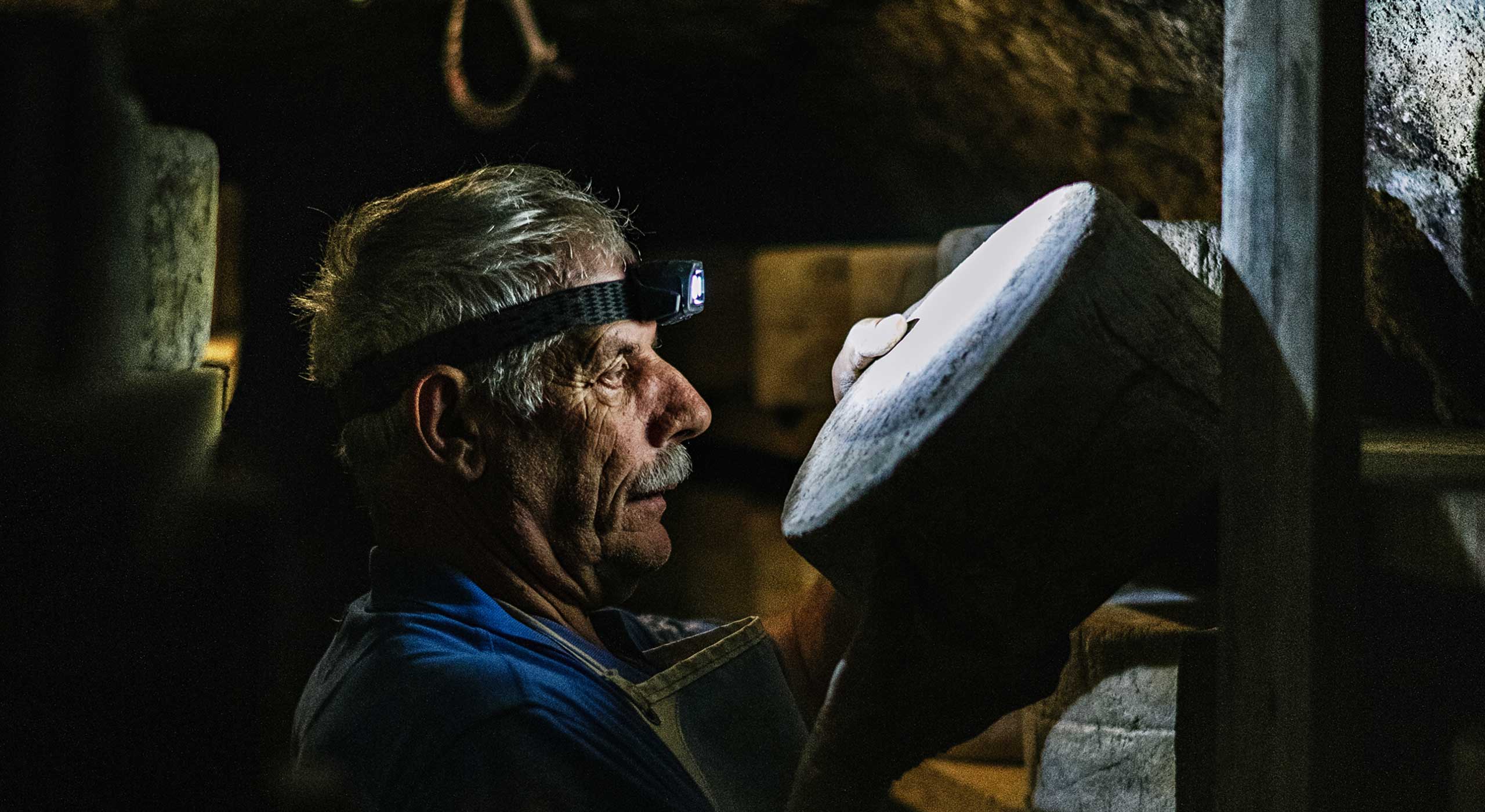
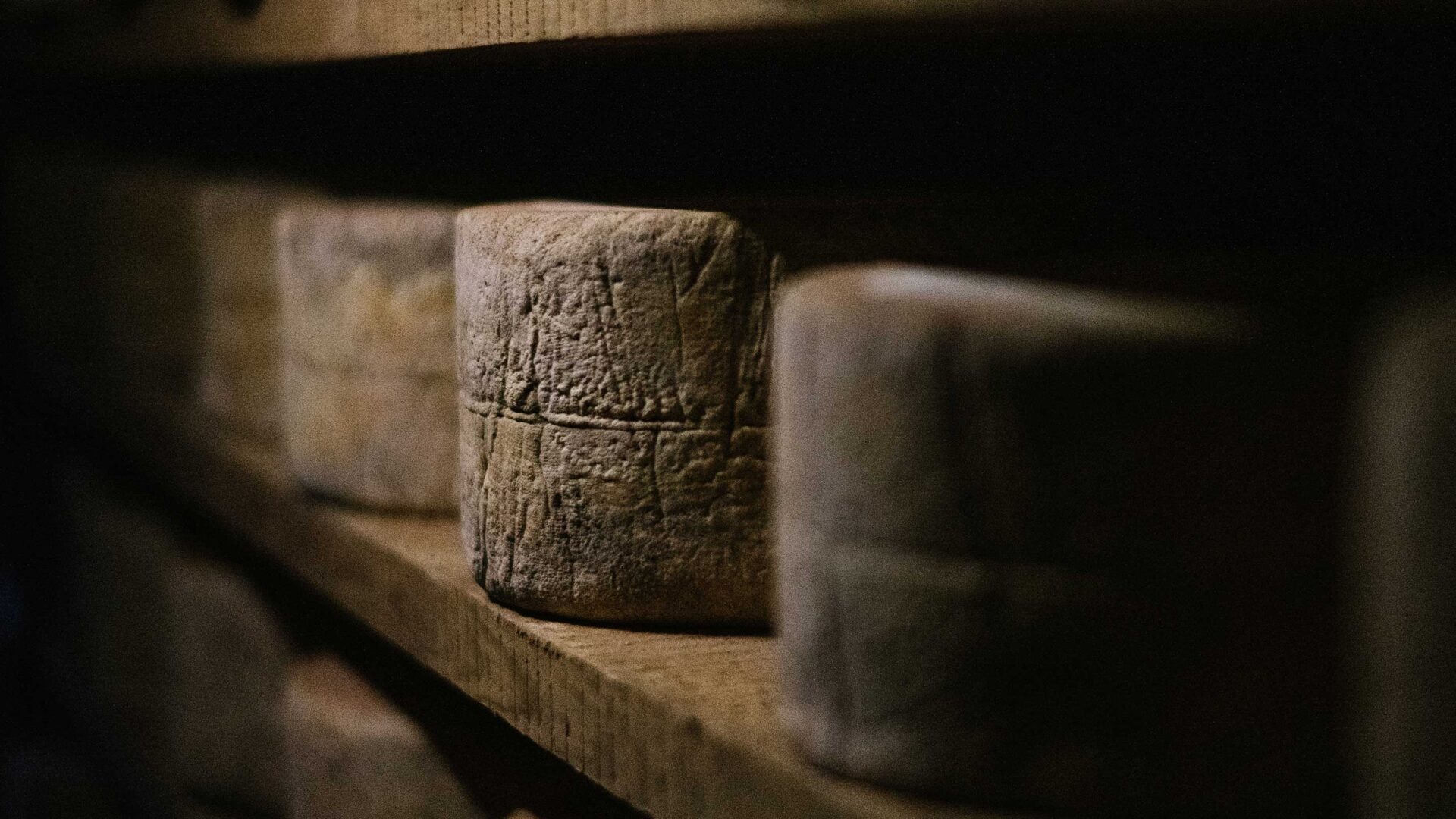
We descend into the cellar where the Bleu de Termignon cheese matures on pine boards. Its rind changes from beige to gray, blending into the color of the rock. In the dim light, we examine a half-open wheel of cheese where the blue veins appear like a delicate ink stain in the paste. “It develops its blue veining all on its own, without being inoculated with Penicillium, the fungus that promotes mold growth in other cheeses,” explains Marc Dubouloz, who looks after Catherine Richard’s Bleu cheeses during the winter at the dairy shop in Annecy.
We return to the wood-paneled kitchen where the old stove warms you from the first chills of autumn. Coffee gurgles in the Italian coffee maker. On the table, there is, of course, Bleu de Termignon, a blueberry tart, and, guess what?, Catherine’s butter, before which we kneel in adoration. The circle of memories of the Vanoise is complete.
Termignon blue cheese leaves its mark. Not just on the palate. It embodies the altitude, the silence of the valleys, and the patient work of those who tend it throughout the summer. When Jean Sulpice truly discovered it, on his home turf, something clicked. This cheese is not simply a rare product. It tells the story of a landscape, a ruggedness, and a dedication to tradition.
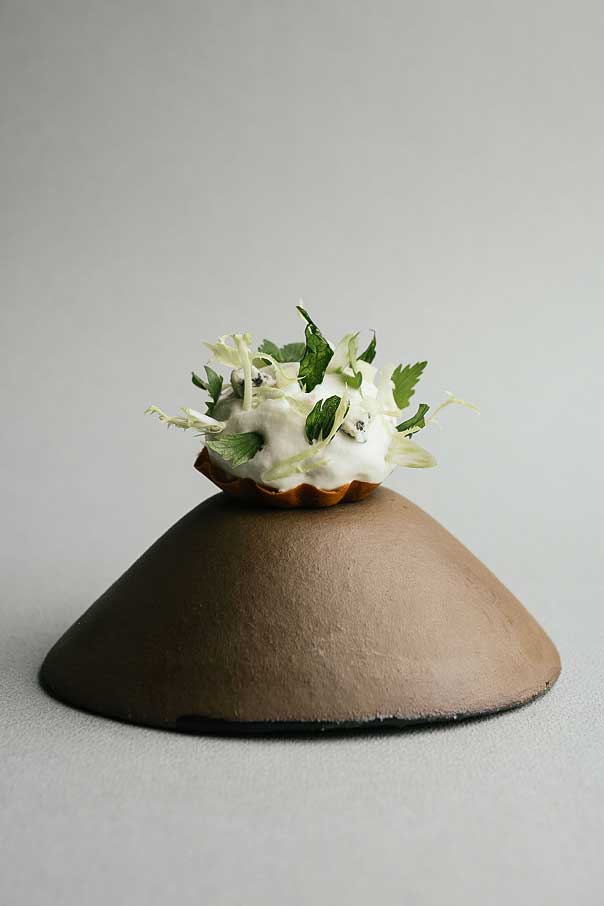
In the chef’s kitchen, it becomes an anchor. Its dense texture, its bold notes, its almost mineral intensity invite precise culinary expression. The dish is built around it like one would construct around a mountain peak: with respect, with restraint, leaving space. The blue cheese converses with other Alpine products, sometimes with a vegetal touch, sometimes with an unexpected sweetness. Balance arises from this controlled tension.
This cheese demands attentive listening. It evolves, changes with age, and surprises from one season to the next. This element of unpredictability reflects Jean Sulpice’s approach to his craft: remaining open, adapting to the unfolding moment, and seeking genuine emotion rather than mere effect. At the Auberge du Père Bise, overlooking Lake Annecy, the blue of Termignon extends the landscape. It brings the high mountains to the plate, with both power and delicacy. A touch of the mountains in an exceptional gastronomic cuisine, deeply connected to its terroir.
By Jean Sulpice
Chef, two Michelin stars
Updated on 17/03/2026